
A bathroom is the smallest room in the house and the one most likely to be hiding damage. It is the only room where water runs against the structure every day, so by the time a floor feels soft or grout keeps cracking, the problem is usually older than the tile.
We take bathrooms down to the framing where it is warranted, fix what is actually wrong, and rebuild it so the next twenty years are uneventful.
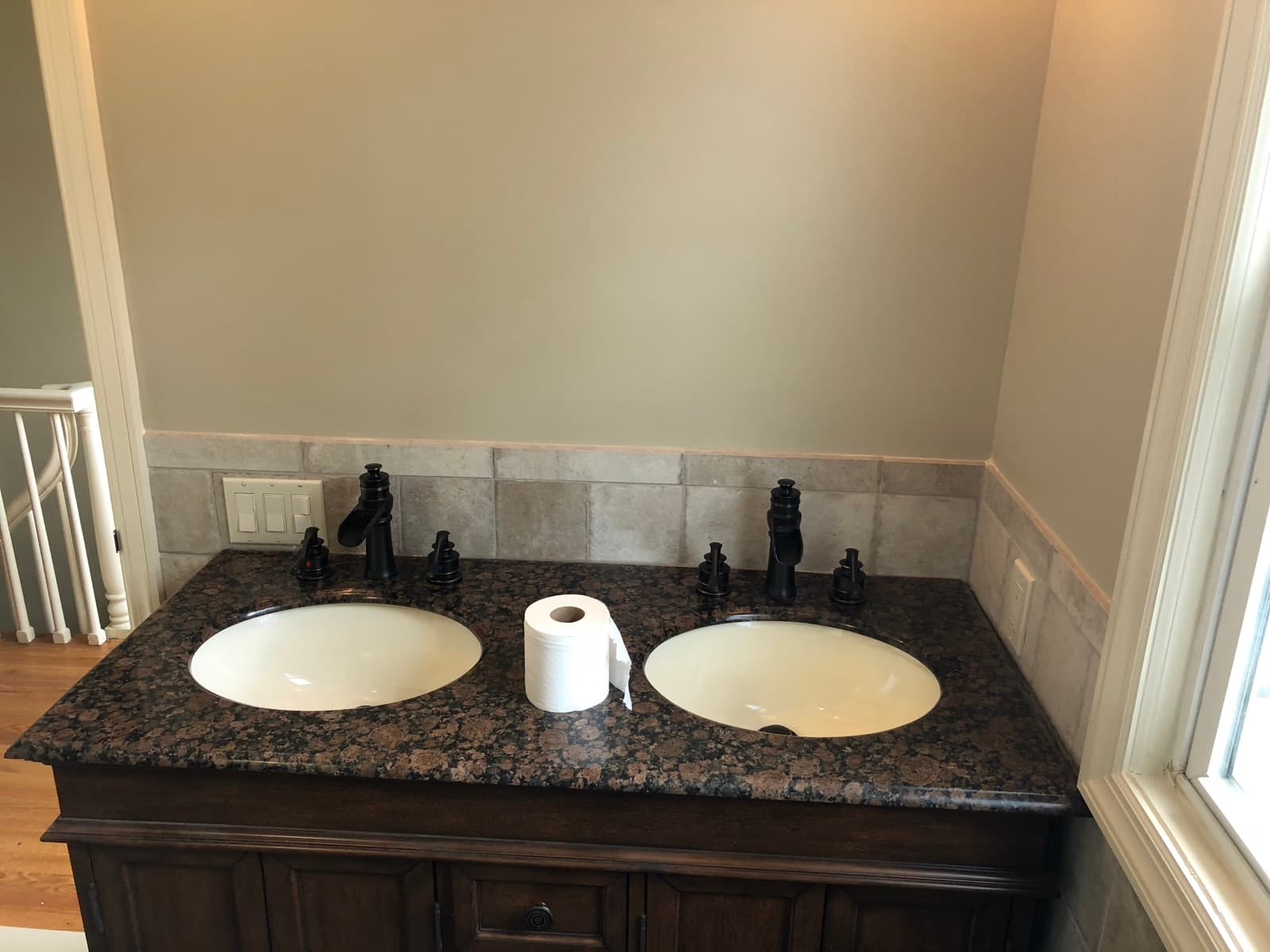
What we find behind the tile
Rotted subfloor around the toilet flange and at the tub apron, where a slow leak has been wicking into the sheathing. It is the most common finding and the one that cannot be tiled over.
Old mortar-bed and mesh shower pans that have failed at the corners, and tile set straight onto drywall in a wet area, which is a leak waiting on a schedule.
No exhaust fan, or a fan ducted into the attic instead of out through the roof or wall. That is how a bathroom quietly grows mould in the ceiling above it.
Galvanized supply lines, an undersized drain, or a vent that was never run properly when a previous owner moved a fixture.
What a full bathroom renovation involves
- Demo and haul-away, then an honest look at the subfloor, framing and supply lines before anything new goes in.
- Plumbing and electrical: fixtures, a GFCI-protected circuit, and an exhaust fan actually ducted to the outside.
- Waterproofing the wet areas properly, so the shower is built to hold water rather than to look like it does.
- Tile, tub or step-in shower, vanity, toilet, lighting, trim and paint.
- Permits pulled and inspections scheduled where the work requires them.
Aging in place, done as part of the renovation
If the plan is to stay in the house, the time to build for that is while the walls are already open. It costs a fraction of what it costs to come back later.
A curbless or low-threshold step-in shower instead of stepping over a tub. Wider doorways. Solid blocking in the walls behind the shower and toilet so grab bars can be mounted anywhere later, into framing rather than into drywall anchors. A comfort-height toilet and a vanity with knee clearance if it is wanted.
Blocking is the one to do even if you want nothing else. It is inexpensive while the drywall is off and near impossible to add cleanly afterwards.
What drives the price
The same three levers as any renovation, in a smaller room where each one lands harder.
- Whether fixtures move
- Keeping the toilet, tub and vanity where they are keeps the plumbing where it is. Moving a drain in a bathroom often means opening the ceiling below it, which is a different project.
- What the surfaces are
- A tub-and-surround replacement, a full tile shower and a curbless walk-in are three different amounts of labour before anyone picks a tile.
- What the demo turns up
- Rot, failed venting or old supply lines. We tell you what we find and what it costs before we carry on, in writing.
Most of our renovation projects run between $20,000 and $100,000 across the whole range of work we do; a single bathroom is priced on its own scope after we have seen the room. You get an itemized written estimate either way.
If it is your only bathroom
Say so at the walkthrough. It changes how we sequence the job. The goal becomes getting the toilet back in service quickly and keeping the out-of-use stretch as short as the inspections allow, rather than working in the most efficient order.
You get the sequence in writing before demo, including which days the water is off.
Common questions
How much does a bathroom renovation cost in the Lehigh Valley?
It depends on whether the fixtures move, what the shower is, and what the demo turns up. We price a bathroom after seeing it, and you get an itemized written estimate with the scope in plain language before anything starts.
How long does a bathroom take?
Less than a kitchen, but the same things stretch it: inspections between rough-in and closing the walls, and any rot or venting problem found at demo. You get a written sequence before demo day rather than a promise on the phone.
Do I need a permit for a bathroom remodel?
If plumbing moves, wiring changes, or structure is altered, yes. Replacing a vanity or retiling in place generally does not. Pennsylvania runs the Uniform Construction Code locally, so the township sets the fees and inspection scheduling. We pull the permit and book the inspections.
Can you convert a tub to a walk-in shower?
Yes, and it is one of the most common requests we get from homeowners planning to stay in the house. The drain usually has to move, so the answer for your bathroom depends on what is under the floor, which we check during the estimate, not after demo.
Do you install grab bars?
We install them, and more importantly we put solid blocking in the walls while they are open so bars can be mounted into framing anywhere later. Anchors into drywall are not a substitute.