
Aging in Place: The Modifications Worth Doing While the Walls Are Open
Most people who end up needing these changes get them done in a hurry, after something has already happened, at two or three times what they would have cost during a renovation that was going to happen anyway.
If there is a reasonable chance you are staying in this house for the long run, here is what to build in now, roughly in order of how much cheaper it is to do now than later.
1. Blocking in the walls. Do this one regardless.
Solid wood behind the drywall wherever a grab bar might ever go: both walls of the shower or tub, beside the toilet, and along the wall by the vanity.
Not the bars themselves, just the blocking. The bars can be chosen and mounted twenty years from now, in a colour that matches whatever the bathroom looks like then, screwed into framing that is already waiting.
Cost while the drywall is off: very little. Cost later: opening finished walls, which means retiling, which means the whole room again. It is the highest-return thing on this list by a wide margin, and it is invisible when finished.
2. A curbless or low-threshold shower instead of a tub
Stepping over the wall of a tub is the single most common way people get hurt in their own bathroom. A walk-in shower with no lip, or a very low one, removes that.
Two honest notes. First, this usually means the drain moves, which means opening the floor and sometimes the ceiling below, so it is a real project, not a fixture swap, and it belongs in a renovation you were already doing. Second, if it is the only bathtub in the house, think about resale before you take it out; a family looking at the house may want one somewhere.
While the shower is being built: a hand-held shower head on a slide bar, a bench or the framing for one, and a mixing valve with a scald limit are all cheap additions at that moment.
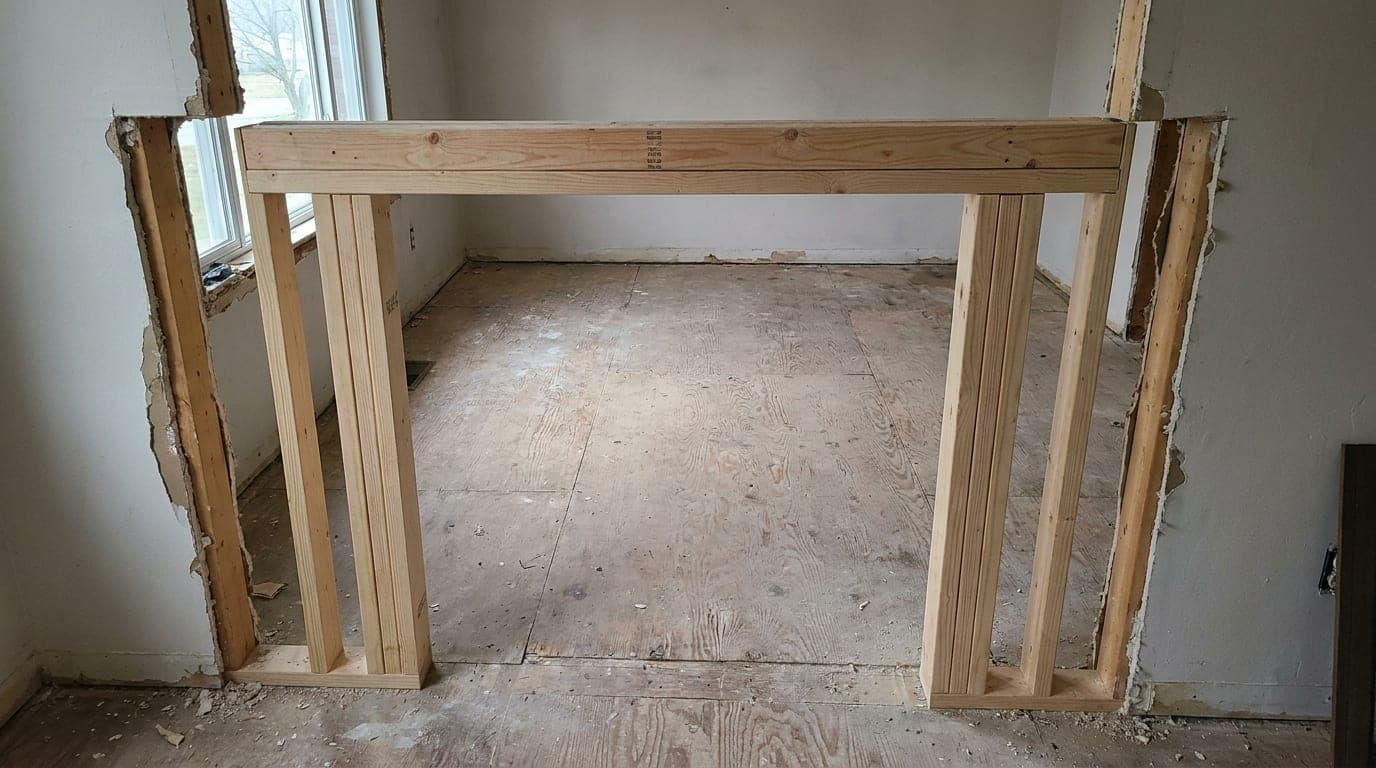
3. Doorways, if walls are moving anyway
A standard interior door is narrower than a walker or a wheelchair wants. If a wall is already coming down in your renovation, widening the openings that matter, the bathroom, the main bedroom and the path from the parking spot to the kitchen, costs framing and drywall you are already paying someone to do.
If no walls are moving, swing-clear hinges are a much cheaper way to buy a couple of inches on an existing door.
4. Lighting and switches
Ageing eyes need substantially more light than the same eyes did at forty, and the difference is uneven. The trouble is contrast and shadow, not brightness alone. During electrical work, that is layered lighting rather than one fixture: under-cabinet in the kitchen, task light at the vanity, and something low on the route from bed to bathroom.
Rocker switches instead of toggles, and lever door handles instead of round knobs, are worth choosing while you are choosing anyway. Both work when hands do not.
5. One entrance that does not need a step
Usually a side or garage door, where the grade is closest. Sometimes it is achievable with a rebuilt landing and a gentler run rather than a ramp. Worth pricing while any exterior or concrete work is already scheduled.
What we would not tell you to do
We are not going to talk you into a stairlift, a full wet room, or a bathroom that looks institutional. Most of this list is invisible in the finished house: blocking, a slightly wider door, better lighting, a shower without a lip. That is the point. The changes that read as "accessible modifications" are mostly the ones done in a panic later.
This work is part of what we do rather than a separate speciality, which is the useful part: it happens inside the renovation you were already planning, in the same schedule, from the same contractor. See aging in place, or the full bathroom renovation scope.
Call (484) 944-6441 and tell us what you are planning for the long run. It changes what we recommend.